
How Far and How Fast Can You Drive on a Donut Spare?
Keep it under 80 km/h and use it to get somewhere, not to carry on with your week. A donut is a different size from your other tires, so running one for long puts strain on the rest of the vehicle. It is there to get you to a shop or somewhere safe.
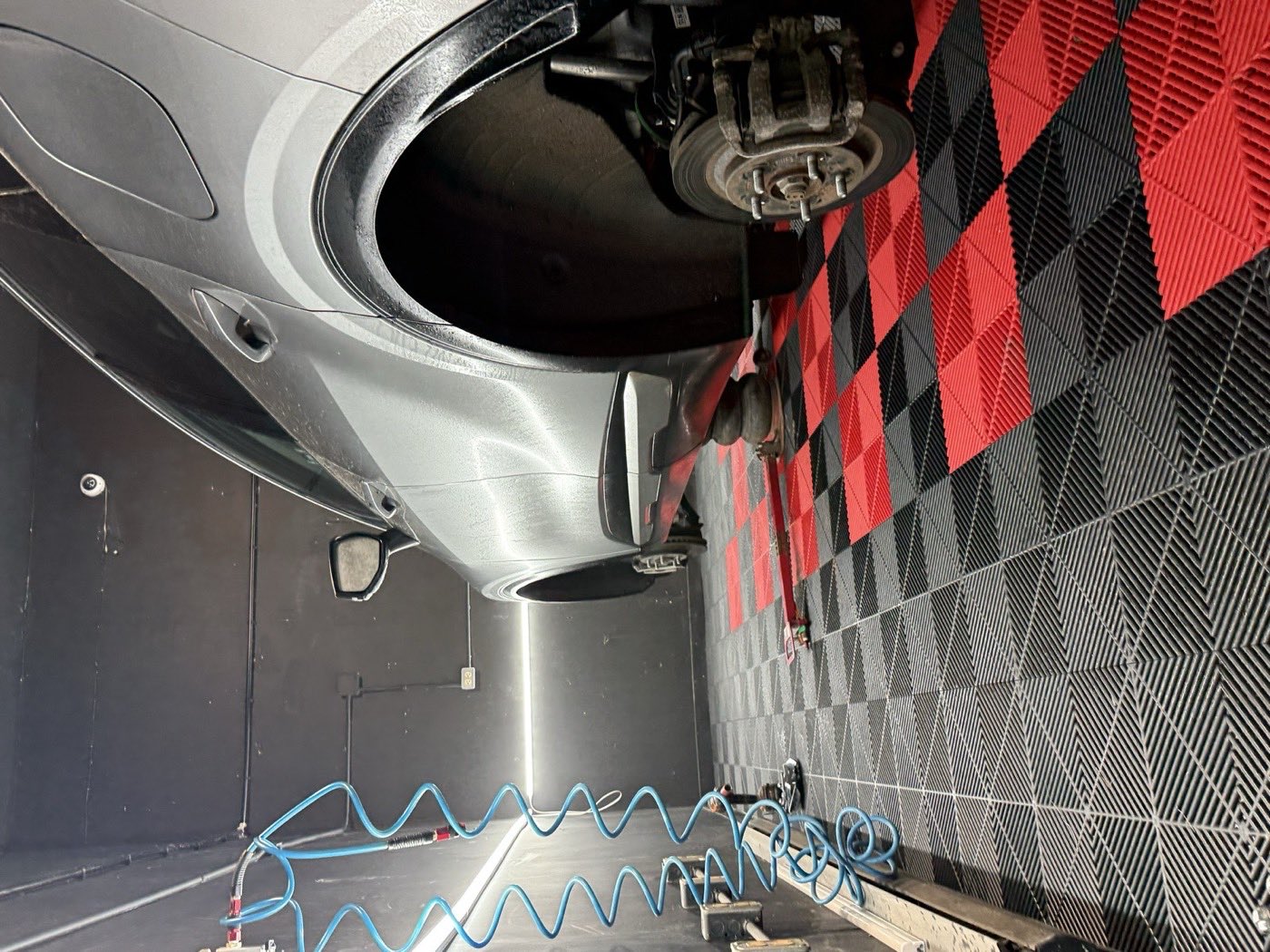
Keep it under 80 km/h and use it to get somewhere, not to carry on with your week. A donut is a different size from your other tires, so running one for long puts strain on the rest of the vehicle. It is there to get you to a shop or somewhere safe.
A donut spare is emergency equipment. It is not a tire, and treating it like one causes problems well beyond the flat you started with.
How fast can you drive on a donut spare?
Under 80 km/h. That figure is usually printed right on the spare itself, and it is not a suggestion. A donut is smaller, narrower, and built to different standards than the tires it is temporarily standing in for.
If it is a donut, you can only drive under 80 km/h. Generally it is just to get you to your destination. The donut is different from all the other tires on the car, so drive as slowly as you reasonably can, because it can cause damage to the rest of the vehicle. It is not for casual driving. It is to get you to the shop or to get yourself somewhere safe. That is it.
Why the limit exists
- The spare is physically smaller, so it spins faster than the other three to cover the same ground
- It has less tread and less contact with the road, so grip and braking are reduced
- It is built light to be carried in the trunk, not for sustained load or heat
- The size difference means your ABS and stability systems are reading a wheel that does not match
How long can you drive on one?
As far as it takes to reach a shop or a safe place, and no further. The size mismatch is the reason, and it is the same mechanical problem that makes mismatched tires a bad idea generally.
On an all-wheel-drive vehicle this matters even more, because the drivetrain is continuously comparing wheel speeds and a donut is permanently turning at a different rate from the other three. That is real strain on an expensive component, not a theoretical concern.
What should you do when you fit one?
Get the flat looked at the same day if you can. The tire that came off may well be repairable, and whether it is often depends on how far it was driven while flat.
The order of operations
- Get somewhere safe before doing anything
- Fit the spare, and torque the nuts properly rather than running them on hard
- Check the spare's pressure. Donuts sit for years and lose air quietly, and a soft spare is not much better than the flat
- Stay under 80 km/h and drive gently
- Come straight to a shop
That third step catches people. A spare that has been in the trunk since the vehicle was new is very often low, and nobody discovers that until the worst possible moment.
Will your flat tire be repairable?
Often yes, if it was not driven on while deflated. A nail in the tread area with the tire still holding air is usually a routine repair. A tire driven flat for any real distance shreds its inner liner and cannot be patched.
Our tire repair is a flat rate by vehicle tier, and whether a tire can be patched or needs replacing has the full price list and what each repair covers.
We patch, never plug. A patch goes on the inside of a dismounted tire after the inside has been inspected, and it normally lasts the rest of the tire's life.
Bring a spare tire if you have one
If you already own a matching tire sitting at home, bring it with you. If the flat turns out to be finished, having it in the car saves a second trip or an unplanned purchase.
Is a donut the same as a full-size spare?
No, and it is worth knowing which one you have before you need it. A full-size spare matches your other tires and can be driven normally. A donut, sometimes called a space saver, exists purely to get you off the shoulder.
Check your trunk this week rather than on the side of the road. While you are there, check the pressure in it.
Key takeaways
- Under 80 km/h on a donut, and slower if conditions are poor.
- It is transport to a shop, not a tire you keep using.
- The size mismatch strains the drivetrain, especially on all-wheel drive.
- Check the spare's pressure when you fit it. They lose air sitting in the trunk.
- Avoid the highway on one if you have any alternative.
- Get the flat assessed the same day. Whether it is repairable depends partly on how far it was driven flat.
Frequently asked questions
How fast can you drive on a donut spare? Under 80 km/h. That is the limit for a temporary spare and it is usually printed on the spare itself. Go slower than that if the road is poor or the spare feels unsettled, because a donut is smaller and narrower than your real tires and handles differently.
How long can you drive on a donut? Only as far as you need to reach a shop or somewhere safe. It is not a tire you keep driving on. Because a donut is a different size from the other three, running one for an extended period puts strain on the rest of the vehicle.
Can you drive on the highway with a donut spare? It is best avoided. Highway speeds are above what a donut is rated for, and other traffic is moving much faster than you would be. If you have no alternative, stay in the right lane, keep under 80 km/h, and get off at the first opportunity.
Is a donut the same as a full-size spare? No. A full-size spare matches your other tires and can be driven on normally. A donut, sometimes called a space saver, is smaller and narrower and is built purely to get you off the side of the road. Check which one is in your trunk before you need it.
Frequently asked questions
How fast can you drive on a donut spare?
Under 80 km/h. That is the limit for a temporary spare and it is usually printed on the spare itself. Go slower than that if the road is poor or the spare feels unsettled, because a donut is smaller and narrower than your real tires and handles differently.
How long can you drive on a donut?
Only as far as you need to reach a shop or somewhere safe. It is not a tire you keep driving on. Because a donut is a different size from the other three, running one for an extended period puts strain on the rest of the vehicle.
Can you drive on the highway with a donut spare?
It is best avoided. Highway speeds are above what a donut is rated for, and other traffic is moving much faster than you would be. If you have no alternative, stay in the right lane, keep under 80 km/h, and get off at the first opportunity.
Is a donut the same as a full-size spare?
No. A full-size spare matches your other tires and can be driven on normally. A donut, sometimes called a space saver, is smaller and narrower and is built purely to get you off the side of the road. Check which one is in your trunk before you need it.
Book your visit at PitStop & Go
300 Wilsey Road #1, Fredericton, New Brunswick E3B 5J1 · (506) 248-6006