
Can a Tire Be Patched, or Does It Need Replacing?
Most punctures in the tread area can be patched. A tire needs replacing when the damage is in the sidewall, the puncture is too large, the cut is a slice rather than a hole, the tread is gone, or the wear is uneven enough that the tire is finished anyway.
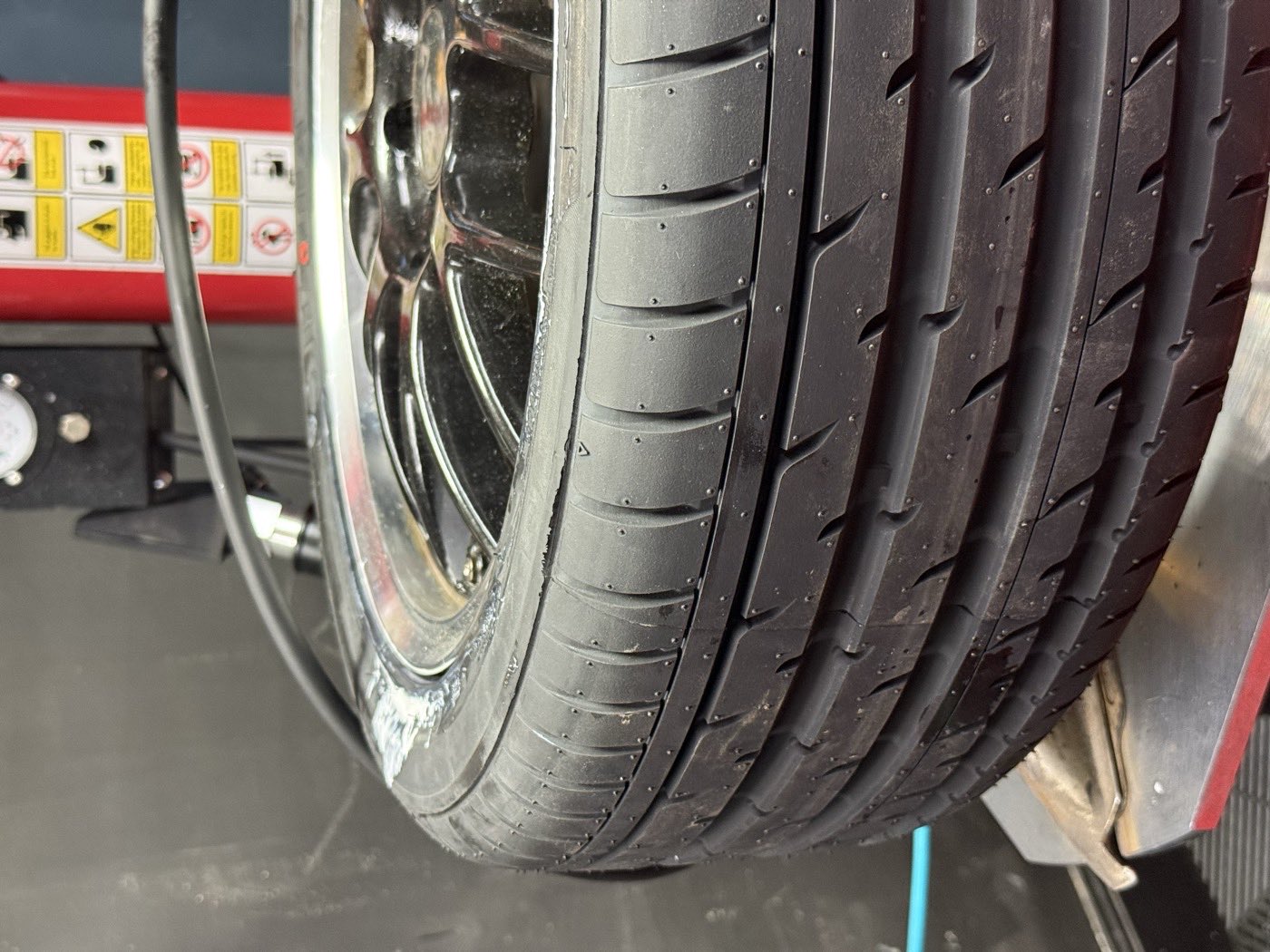
Most punctures in the tread area can be patched. A tire needs replacing when the damage is in the sidewall, the puncture is too large, the cut is a slice rather than a hole, the tread is gone, or the wear is uneven enough that the tire is finished anyway.
The honest answer is that we cannot tell you over the phone. A nail in the middle of the tread on a tire with good rubber left is almost always a repair. Everything else depends on what we find once the tire comes off the rim.
When can a tire be repaired?
A tire is repairable when the puncture sits in the tread area, the hole is small and clean, the tire still has usable tread, and the inside shows no damage from being driven flat. That covers the large majority of nails, screws, and staples we pull out of tires every week.
The conditions that have to be met
- The puncture is in the tread, not the shoulder and not the sidewall
- The hole is small enough that a patch can seal it properly
- There is still real tread depth left on the tire
- The tire was not driven far while flat, which shreds the inner liner
- The inside of the tire is clean, with no separation or damage
That last one is the reason the tire has to come off the rim. You cannot assess a tire's inner liner while it is still mounted and holding air.
Why do you patch tires instead of plugging them?
A plug is jammed in from the outside without ever removing the tire, so nothing inside gets inspected. It can work its way out and start losing air later, often with no warning. A patch is applied to the inside of a dismounted tire and stays put for the life of the tire.
We do not plug tires, and the reason is safety. A plug can come out. It can start deflating on you, and it is a temporary fix at best, the kind of thing you use when you are stuck on the side of the road and there is no tire shop nearby. A patch is a different thing entirely. Patches are reliable, they do not wear out, they do not start losing air, they are far more durable, and they usually last the whole life of the tire. It is a permanent repair, which is why it is the only kind we do.
If the tire turns out to need replacing instead, see what a Fredericton tire change costs instead.
Plug versus patch, side by side
| Plug | Patch | |
|---|---|---|
| Tire removed from rim | No | Yes |
| Inside of tire inspected | No | Yes |
| Seals from | Outside | Inside |
| Can loosen over time | Yes | No |
| Intended lifespan | Temporary | Life of the tire |
| What we do | Never | Always |
What damage makes a tire unrepairable?
Sidewall damage of any kind, a slice rather than a puncture, a puncture too large to seal, exposed steel belts, no remaining tread, and severe uneven wear all end the conversation. In those cases the tire is replaced, because a repair would either fail or would be holding together a tire that is already finished.
The list of things that kill a tire is longer than most people expect. If it is sliced rather than punctured, we cannot fix it. If the tire is used up to the point where the wire is showing through, it is done. No tread left, done. Uneven wear across the tire, done. A large puncture we cannot seal properly, done. Any sidewall damage at all, done. We would rather tell somebody their tire is finished than send them out on a repair we do not trust.
The one that surprises people most
The inside edge. A tire can look completely fine from where you stand, because the outside shoulder is the part you see. Bad alignment wears the inside edge down first, and it is invisible from the driveway. Run your hand along the inside face of the tread. If it feels bald compared to the outside, that tire is nearly finished and you did not know.
That is a regular cause of the flats we see. The customer had no idea the tire was bad, because from the side it looked normal.
If a flat catches you right before the seasonal swap, check the Fredericton winter tire timing so the other set doesn't fall behind too.
What does a tire repair cost in Fredericton?
Our tire repair is a flat rate, posted, with no surprise labour line. It is $45 for small and medium vehicles, $55 for large and large plus, and $65 for heavy and commercial. That price includes dismounting, patching, remounting, balancing, inflating to spec, a leak test, and tire shine.
What the flat rate includes
| Vehicle tier | Tire repair |
|---|---|
| Small / Medium | $45 |
| Large / Large+ | $55 |
| Large++ (heavy, call ahead) | $65 |
Prices are pre-tax. Every repair includes the full process: dismount, patch from the inside, remount, machine balance, inflate to spec, torque to spec, leak test, tire shine, and packaging for any tire we take off.
The same scope is summarized on our tire repair service page if you want the short version.
If we open the tire and find it cannot be safely repaired, we tell you before doing anything else. You are not paying for a repair we cannot stand behind.
Key takeaways
- Punctures in the tread are usually repairable. Sidewall damage never is.
- We patch, we do not plug. A plug is a roadside emergency fix, not a repair.
- A proper patch normally lasts the rest of the tire's life with no follow-up.
- Slices, exposed belts, no tread, large punctures, and uneven wear all mean replacement.
- Check the inside edge of your tread by hand. Alignment wear hides where you cannot see it.
- Tire repair is a flat $45 for small and medium vehicles, including balancing and a leak test.
Frequently asked questions
How much does a tire patch cost? Our tire repair is a flat $45 for small and medium vehicles, $55 for large and large plus, and $65 for heavy and commercial. That covers dismounting the tire, patching it from the inside, remounting, balancing, inflating, a leak test, and tire shine. There is no separate labour charge on top.
Is a tire plug safe? Not as a permanent repair. A plug is pushed in from the outside without removing the tire, so nobody inspects the inside for hidden damage, and the plug can work its way loose and start losing air. It is a roadside get-home fix. We do not plug tires.
Can a sidewall puncture be repaired? No. The sidewall flexes constantly as the tire rotates and carries the vehicle's weight, so a repair there cannot hold. Any puncture, cut, or bulge in the sidewall means the tire is finished. That is true regardless of how new the tire is or how small the damage looks.
How long does a tire patch last? A properly installed patch normally lasts the rest of the tire's usable life. It does not wear out, it does not slowly leak, and you do not need to come back and have it redone. That is the whole reason we patch instead of plug.
Frequently asked questions
How much does a tire patch cost?
Our tire repair is a flat $45 for small and medium vehicles, $55 for large and large plus, and $65 for heavy and commercial. That covers dismounting the tire, patching it from the inside, remounting, balancing, inflating, a leak test, and tire shine. There is no separate labour charge on top.
Is a tire plug safe?
Not as a permanent repair. A plug is pushed in from the outside without removing the tire, so nobody inspects the inside for hidden damage, and the plug can work its way loose and start losing air. It is a roadside get-home fix. We do not plug tires.
Can a sidewall puncture be repaired?
No. The sidewall flexes constantly as the tire rotates and carries the vehicle's weight, so a repair there cannot hold. Any puncture, cut, or bulge in the sidewall means the tire is finished. That is true regardless of how new the tire is or how small the damage looks.
How long does a tire patch last?
A properly installed patch normally lasts the rest of the tire's usable life. It does not wear out, it does not slowly leak, and you do not need to come back and have it redone. That is the whole reason we patch instead of plug.
Book your visit at PitStop & Go
300 Wilsey Road #1, Fredericton, New Brunswick E3B 5J1 · (506) 248-6006