
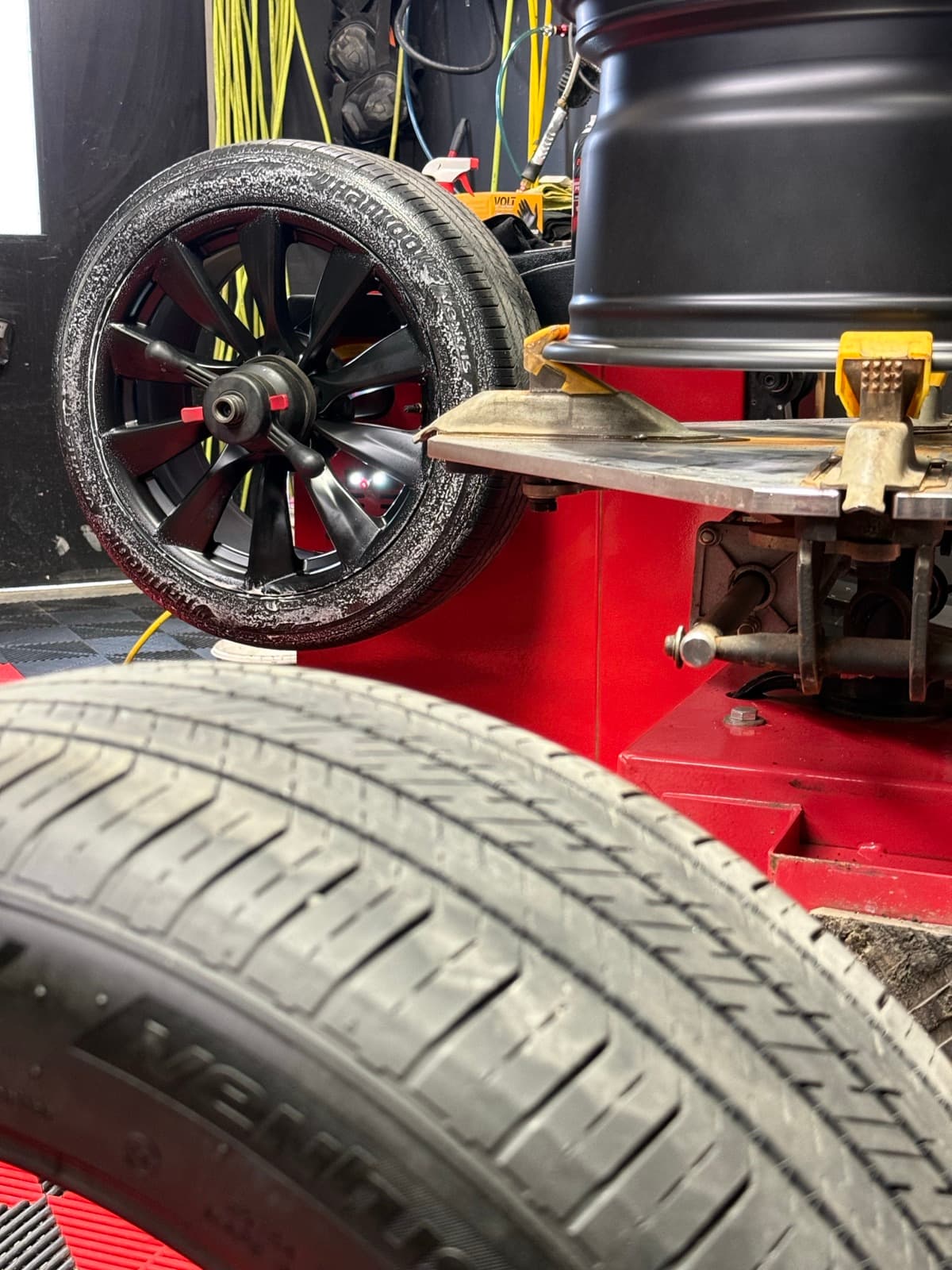
On-rim means your winter and summer tires each sit on their own rims, so a changeover is just swapping whole wheels: 10 to 20 minutes, from $35 a set. Off-rim means one set of rims: we dismount the old rubber, mount the other season's, balance it and reinstall: 20 to 40 minutes, from $70. If you own a second set of rims, on-rim wins on every measure.
- On-rim = swap whole wheels (both seasons already on their own rims). Fastest and cheapest.
- Off-rim = dismount/mount/balance on one set of rims. Takes longer, costs more.
- On-rim changeovers at PitStop & Go start at $35 a set; off-rim from $70.
- A second set of steel rims usually pays for itself in a few seasons.
On-rim: the fast lane
If your winter and summer tires each live on their own set of rims, a seasonal changeover is just unbolting one set of wheels and bolting on the other. We torque everything to spec and you are out in 10 to 20 minutes. It is the cheapest, quickest, and gentlest option for your tires. This is exactly how a seasonal swap works: book your Fredericton winter tire slot once you know which set is going on next.
Off-rim: one set of rims
If you only have one set of rims, the off-rim change dismounts the current tires, mounts the other season's rubber, balances each wheel, and reinstalls. It works perfectly well: it just takes longer and costs more each time, and it adds a little wear with every mount. Having the tire off the rim is also the easiest moment to catch a repairable puncture: see what qualifies for tire repair before you assume a replacement is needed.
Side by side: cost and time
Cost, for a full set of four on a small car: on-rim from $35, off-rim from $70. The gap widens with vehicle size, because an off-rim change is more work on a bigger, heavier wheel. Every tier is published on our pricing page.
Time: on-rim 10 to 20 minutes, off-rim 20 to 40. In changeover season that difference decides whether you wait or not.
Wear: an on-rim swap never touches the tire bead. An off-rim change breaks the bead twice a year, every year: not dangerous, but it is avoidable wear and one more chance for a small nick.
Balancing: included in the off-rim price. An on-rim swap does not re-balance by default, because nothing was dismounted: if you feel a highway vibration, add a balance to the visit.
Should you buy a second set of rims?
For most year-round drivers, yes. A set of steel rims is inexpensive, makes every future changeover faster and cheaper, and protects your good alloys from a winter of salt and potholes. We can size and source them for you: see the rims in our shop.
The arithmetic is simple: you save the difference between the two services every single changeover (currently $35 a season on a small car, more on a truck), twice a year if you count both directions. Steel rims usually clear their cost inside a few seasons and keep paying after that. Either way, see the full Fredericton tire change price grid before you decide.
Frequently asked
What is the difference between on-rim and off-rim tires?
On-rim ("tires on rims") means each seasonal set is already mounted on its own wheels, so the changeover is a straight wheel swap. Nothing is dismounted. Off-rim ("tires off rims") means you own one set of rims and the tires have to come off and go back on each season, which adds dismounting, mounting and balancing to the job. On-rim is 10 to 20 minutes from $35; off-rim is 20 to 40 minutes from $70.
Off-rim vs on-rim: which should I choose?
Choose on-rim if you already have (or are willing to buy) a second set of rims: it is cheaper every single season, faster, and gentler on the tire beads. Choose off-rim if you only own one set of rims and are not ready to buy a second; it is the same quality of work, it just costs more each time because there is more of it.
Is it cheaper to have winter tires on their own rims?
Over time, yes. An on-rim changeover is faster and cheaper each season (from $35 vs $70 off-rim), there is no repeated mounting wear on your tires, and the swap is quicker. A set of steel winter rims typically pays for itself within a few seasons.
How long does each take?
An on-rim change takes about 10 to 20 minutes. An off-rim change, dismount, mount, balance, reinstall, takes 20 to 40 minutes because there is far more work involved.
Does remounting tires every season hurt them?
Repeated mounting and dismounting adds a little wear to the bead and is one more chance for a small nick. Keeping each season on its own rims avoids that entirely, another reason a second set of rims is worth it.
Ready to roll out?
Book online in under two minutes, or call the shop and we'll find a slot today.