Will My Tires Pass a New Brunswick Inspection?
Your tires need at least 1.6mm of tread in the major grooves, no cord damage or ply separation causing a bump or bulge, and no cut or weather cracking beyond about 2.5cm. The failures we hear about most are bald tires and visibly worn or damaged rubber.
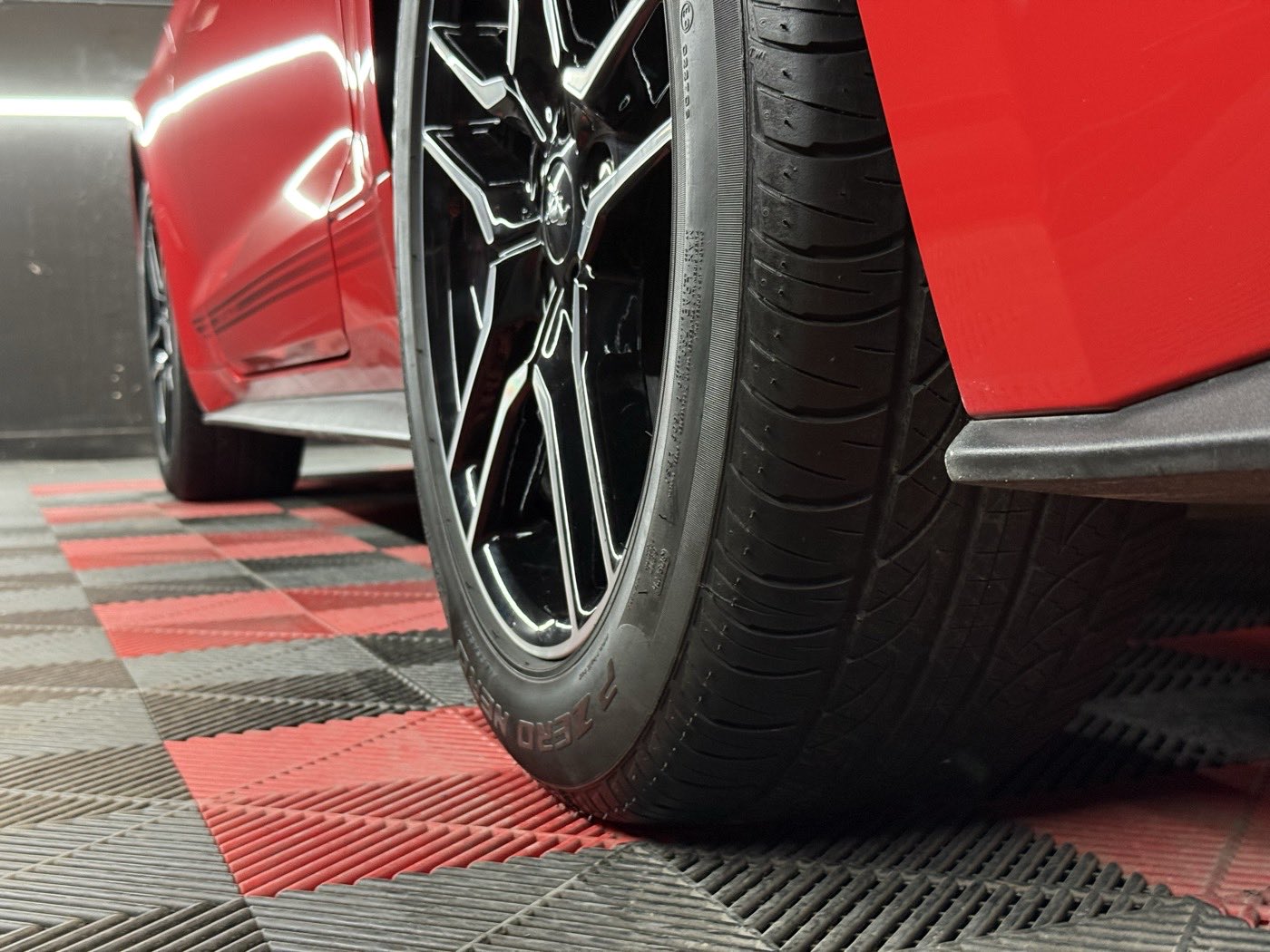
Your tires need at least 1.6mm of tread in the major grooves, no cord damage or ply separation causing a bump or bulge, and no cut or weather cracking beyond about 2.5cm. The failures we hear about most are bald tires and visibly worn or damaged rubber.
Tires are one of the easiest inspection items to check yourself, and one of the most common reasons a vehicle comes back with a fail.
What are the tire rules for a New Brunswick inspection?
New Brunswick's inspection manual rejects a tire on two tread measures: if the tread wear indicators contact the road in any two adjacent grooves at three points around the tire, or if less than 1.6mm, which is 2/32 of an inch, remains in any two adjacent major grooves at three points around the tire. It also rejects any tire with cord damage or ply separation causing a bump or bulge, and any tire cut or weather cracked in excess of about 2.5cm, roughly 1 inch, in any direction.
Source: New Brunswick Official Vehicle Inspection Station Manual
The measurable rules
| Requirement | Standard |
|---|---|
| Minimum tread depth | 1.6mm (2/32 in.) in any two adjacent major grooves |
| Damage | Cord damage, or ply separation causing a bump or bulge |
| Cracking | Cut or weather cracked beyond about 2.5cm (1 in.) |
| Winter tires | Not required on passenger vehicles. Only school buses |
If the inspection is prompting a full seasonal swap anyway, book the seasonal swap on our Fredericton winter page.
Worth being clear on the tread number: 1.6mm is the legal fail line, not the point where a tire is still doing its job. Wet grip and snow traction drop off well before a tire reaches the wear bars.
Why do tires fail inspection most often?
Three reasons come up again and again: the tires are worn out, there is visible damage and cracking, or the set does not suit the vehicle. None of them are subtle once someone looks properly, which is why checking beforehand is worth the five minutes.
Most vehicles that fail inspection on tires fail for pretty simple reasons. Either the tires are bald, or there are different tires on different axles, or sometimes four completely different tires on the one vehicle. We have had people come in with exactly that. The other thing is dry rot on old tires. Our advice is always the same: check your tread before you book an inspection, and check the year on the sidewall while you are at it. It costs a lot less to find out from us than to pay for a failed inspection and then come back anyway.
The three that catch people
If a tire fails on damage rather than tread, ask whether it's still repairable before assuming a replacement.
- Bald tires. The tread is gone or nearly gone. Usually the owner knew and hoped.
- Mismatched tires. Mismatched tires are not a listed inspection failure on their own. What the manual does reject is a tire smaller than the manufacturer's minimum size, or oversize enough to contact the vehicle, and it notes that mixing radial and conventional tires is not the safest condition. Beyond the inspection, a mismatched set is its own problem.
- Damage and dry rot. Cracking, bulges, and sidewall damage. Age causes this even on tires with tread left.
Do you do vehicle inspections?
No. We do tire work only, and we are not an inspection station. What we can do is look at your tires, measure the tread on all four, check for damage and dry rot, and tell you where they stand before you spend money finding out somewhere else.
That is a useful distinction. If your tires are the thing you are worried about, get them checked first. If they pass our look, you go into your inspection with one fewer variable. If they do not, you get to fix it on your schedule instead of failing and rebooking.
How do you check your own tires before an inspection?
Measure tread depth on all four tires with a gauge in the major grooves, check the inside edge of each tread by hand, look for cracking and bulges on the sidewalls, check the build date stamped on each tire, and confirm the set matches in size and type across each axle.
The five-minute check
- Tread depth on all four. Measure, do not eyeball. A gauge costs a few dollars.
- The inside edge. Run your hand along the inner face of the tread. Alignment wear happens where you cannot see it, and a tire that looks fine from the driveway can be finished on the inside.
- Cracking. Look between the tread blocks and along the sidewall. Fine cracks mean the rubber is going.
- Bulges. Any bump or bulge in the sidewall is a fail and a safety problem. Do not drive on it.
- Do they match? Same size, same type, across each axle and ideally across the vehicle.
The build date check nobody does
The last four digits of the DOT code on the sidewall are the week and year the tire was built. A tire stamped 3223 was built in the 32nd week of 2023. Past five years, the rubber hardens and dry rot starts regardless of how much tread is left. We tell every customer to check the year, every time.
What if your tires will not pass?
Get them replaced before the inspection, not after. A failed inspection costs you the fee, the rebooking, and the time, and you still have to buy tires. Doing it in the right order costs the same money and less of your day.
The replacement fitting itself is priced on the fitting rates on our Fredericton tire change page.
Our posted pricing is on the site and there is no quote process. If you want a straight answer on whether your current set will hold up, call (506) 248-6006 or drop in at 300 Wilsey Road #1. We are open seven days, Monday to Saturday 9 to 7 and Sunday 9 to 5.
Key takeaways
- The legal minimum tread depth in New Brunswick is 1.6mm, or 2/32 of an inch, in any two adjacent major grooves.
- Tires must be free of cord damage or ply separation causing a bump or bulge, and of cuts or weather cracking beyond about 2.5cm.
- Winter tires are not required for passenger vehicles. Only school buses.
- Bald tires and visible damage are the most common tire-related failures. A mismatched set is its own problem beyond the inspection.
- Check the inside edge by hand, because alignment wear hides where you cannot see it.
- We do tire work, not inspections. We will check your tires before you book one.
Frequently asked questions
What is the minimum tire tread depth for a New Brunswick inspection?
1.6mm, which is 2/32 of an inch, measured in any two adjacent major grooves at three points around the tire. A tire also fails if the tread wear indicators contact the road in any two adjacent grooves at three points. That is the legal fail line, not the point where a tire stops gripping well, which happens considerably earlier, especially on wet roads.
Can mismatched tires fail an inspection?
Mismatched tires are not a listed inspection failure on their own. The manual rejects a tire smaller than the manufacturer's minimum size, or oversize enough to contact the vehicle, and notes that mixing radial and conventional tires is not the safest condition. Beyond the inspection, a mismatched set is its own problem.
Do you do vehicle inspections at PitStop & Go?
No. We do tire work only. What we can do is check your tread, look for damage and dry rot, and tell you honestly whether your tires will hold up, before you book an inspection somewhere and pay to find out.
Will cracked or dry rotted tires fail an inspection?
Cord damage or ply separation causing a bump or bulge is a listed failure, and so is a cut or weather cracking beyond about 2.5cm. Dry rot is cracking in the rubber from age or bad storage, and once it is advanced the tire is finished regardless of tread. Get it looked at before your inspection rather than after.
Book your visit at PitStop & Go
300 Wilsey Road #1, Fredericton, New Brunswick E3B 5J1 · (506) 248-6006