
Steel or Alloy Rims for Winter in New Brunswick?
Most drivers run steel for winter. Steel holds up to salt and road debris, and it costs less than alloy, so a second set is easier to justify. Alloy works fine too. The practical argument for steel is that winter rims spend the season covered in salt where nobody sees them.
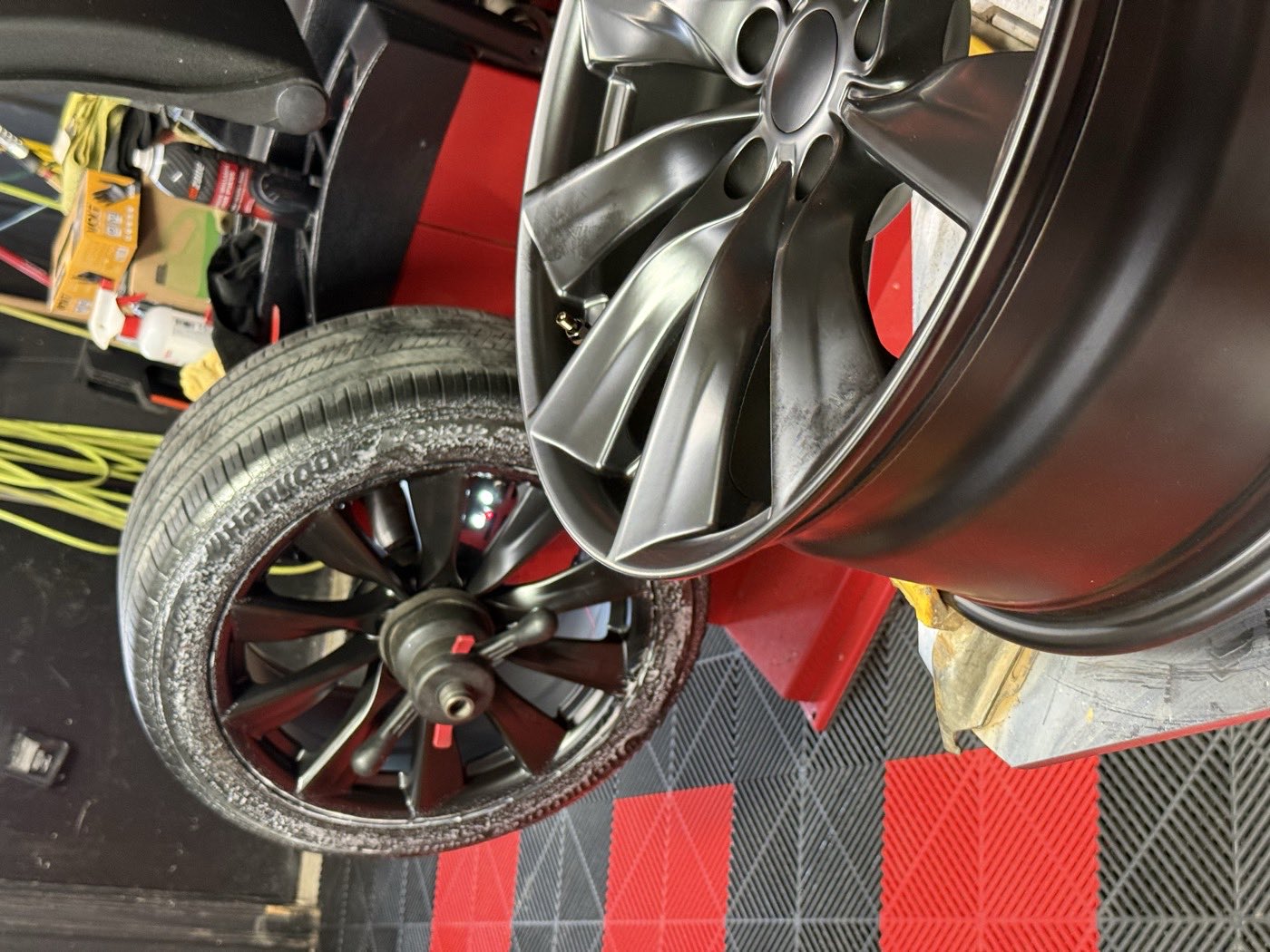
Most drivers run steel for winter. Steel holds up to salt and road debris, and it costs less than alloy, so a second set is easier to justify. Alloy works fine too. The practical argument for steel is that winter rims spend the season covered in salt where nobody sees them.
If you are still deciding whether a second set is worth it at all, start with whether winter rims are worth it. This is not a safety decision. Both materials are safe when properly fitted. It is a durability and money decision.
Why do most people use steel rims in winter?
Because winter is hard on wheels and steel does not care. New Brunswick roads spend months throwing salt, sand, and grit at your rims. Winter tires are not mandatory here, but most drivers run them anyway. Steel takes that abuse without the cosmetic damage alloy shows, and it costs less to buy.
People like to run steel rims in winter because they do not get damaged. Salt, debris, all of it, steel just handles it. They also cost less than alloy, which matters when you are buying a whole second set. That said, plenty of people run alloy in winter too and it is fine. The other thing customers tell us is that they do not really care what their winter rims look like, because most of the time you cannot even see them under the salt and slush anyway.
Either way, book the swap through the seasonal swap scheduler on our Fredericton winter page.
What steel gives you
- Salt and grit resistance without a finish to ruin
- Lower up-front cost, which shortens the payback on a second set
- Simple repairs are not needed, because cosmetic damage does not show the way it does on alloy
- Easier to replace one if you kill a rim on a pothole
What alloy gives you
- Lighter weight at the same size
- Better looks, if the vehicle is one you care about visually year round
- More size and style options, especially on newer vehicles
- Already owned, if you have a spare set sitting from a previous setup
Do alloy wheels get damaged by winter roads?
Salt is hard on wheel finishes over time. An alloy wheel is protected by paint, clear coat, or a machined face, and once that layer is chipped by a stone, salt gets underneath and corrosion starts. It is a cosmetic problem rather than a structural one, but it is permanent.
Steel wheels are usually painted too, and that paint chips as well. The difference is that nobody buys a steel wheel for its looks, so the chipping does not cost you anything you cared about.
The pothole factor
The same pothole can damage the tire itself: rule out a punctured tire before blaming the rim.
Both materials can be bent by a hard pothole hit. Once a rim is bent, balancing improves the result but does not fully fix it, because the wheel itself is no longer round. That is worth knowing before you spend a lot on winter wheels: New Brunswick roads in March are not gentle on anything.
Does rim weight matter for winter driving?
Steel is heavier than alloy at the same size, and on paper that means slightly more unsprung weight for the suspension to control. In normal passenger-vehicle winter driving, most people never notice it. For a winter-only set, cost and durability usually matter more than the weight difference.
If you drive something performance-oriented and you can feel the difference, that is a real reason to run alloy. For a commuter, a crossover, or a pickup, it is not a deciding factor.
What do you need to check before buying winter rims?
Four things have to match your vehicle: bolt pattern, offset, centre bore, and diameter. A rim that is nearly right will not mount correctly, will not sit true, and in some cases will not clear the brakes. Get the specs confirmed before money changes hands.
The four fitment specs
| Spec | What it controls |
|---|---|
| Bolt pattern | How many studs and the circle they sit on. Must be exact |
| Offset | How far the wheel sits in or out. Wrong offset causes rubbing or clearance problems |
| Centre bore | The hole in the middle that sits on the hub. Too small will not fit, too large needs a hub ring |
| Diameter and width | Determines which tire sizes will mount |
Whichever rim you choose, the fitting itself is priced on our Fredericton tire change page.
If you are buying rims from anywhere and you are not certain, bring us the numbers or bring us the vehicle. We would rather check the fitment for free than have you find out at the appointment that a set of four does not fit.
One more thing to budget for
If your vehicle has tire pressure monitoring and you want it working on both sets, the second set needs its own TPMS sensors. Supply and install is $50 for small and medium vehicles and $70 for large, large plus, and heavy. Skipping it means the pressure light stays on for the whole winter.
Key takeaways
- Both steel and alloy are safe. This is a cost and durability call, not a safety one.
- Steel handles salt and debris without the cosmetic cost, and it is less expensive to buy.
- Alloy is lighter and looks better, which matters less on wheels buried in slush for five months.
- Bent rims happen to both materials, and balancing improves a bent rim but does not fully fix it.
- Match bolt pattern, offset, centre bore, and diameter before you buy anything.
- Budget for TPMS sensors on the second set if you want the system live year round.
Frequently asked questions
Does road salt damage alloy wheels? Salt is hard on wheel finishes over time, and winter roads throw salt, sand, and grit at your rims constantly. Alloy wheels have a painted or machined finish that can pit and corrode once it is chipped. Steel takes the same abuse without the cosmetic cost, which is why most winter sets are steel.
Are steel wheels heavier than alloy? Yes, steel is heavier than alloy of the same size. On a normal passenger vehicle in normal winter driving, the difference is not something most drivers notice. The cost and durability advantages usually outweigh the weight for a winter-only set.
Can I use my summer alloy wheels for winter tires? You can, and plenty of people do. Just know that the wheels spend five or six months in salt and grit, and the finish takes that abuse. If the wheels matter to you cosmetically, a separate steel set keeps them out of the worst of it.
Do steel and alloy rims need different tires? No. The tire is matched to the rim diameter and width, not to the material. What matters is that the rim's bolt pattern, offset, centre bore, and diameter all fit your vehicle, and that the tire size suits the rim.
Frequently asked questions
Does road salt damage alloy wheels?
Salt is hard on wheel finishes over time, and winter roads throw salt, sand, and grit at your rims constantly. Alloy wheels have a painted or machined finish that can pit and corrode once it is chipped. Steel takes the same abuse without the cosmetic cost, which is why most winter sets are steel.
Are steel wheels heavier than alloy?
Yes, steel is heavier than alloy of the same size. On a normal passenger vehicle in normal winter driving, the difference is not something most drivers notice. The cost and durability advantages usually outweigh the weight for a winter-only set.
Can I use my summer alloy wheels for winter tires?
You can, and plenty of people do. Just know that the wheels spend five or six months in salt and grit, and the finish takes that abuse. If the wheels matter to you cosmetically, a separate steel set keeps them out of the worst of it.
Do steel and alloy rims need different tires?
No. The tire is matched to the rim diameter and width, not to the material. What matters is that the rim's bolt pattern, offset, centre bore, and diameter all fit your vehicle, and that the tire size suits the rim.
Book your visit at PitStop & Go
300 Wilsey Road #1, Fredericton, New Brunswick E3B 5J1 · (506) 248-6006