
How Do You Read Tire Size on the Sidewall?
Your tire size is the code on the sidewall, like 225/65R17 98H. The first number is width in millimetres, the second is sidewall height as a percentage of that width, R means radial, and the last number is the wheel diameter in inches.
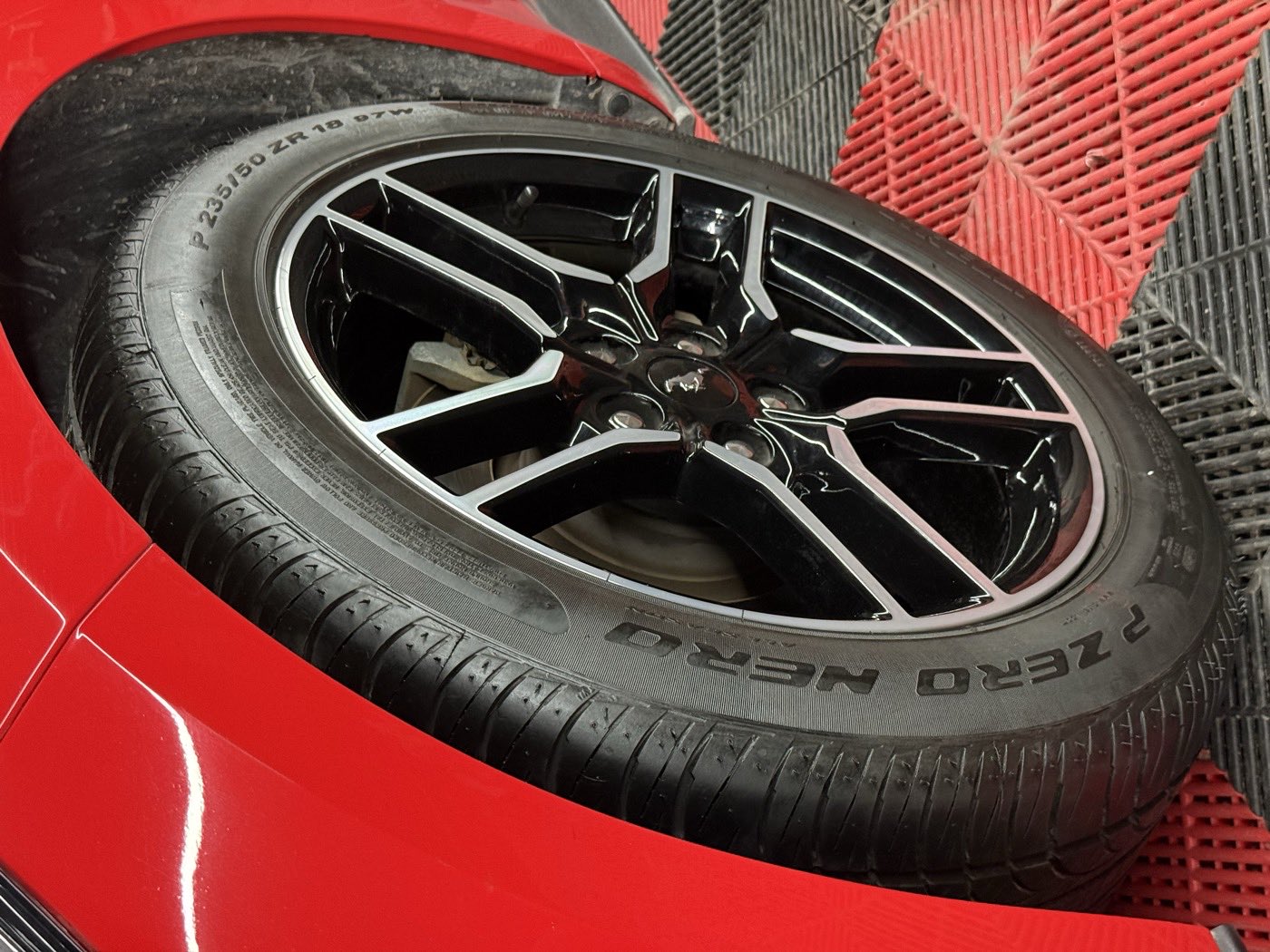
Your tire size is the code on the sidewall, like 225/65R17 98H. The first number is width in millimetres, the second is sidewall height as a percentage of that width, R means radial, and the last number is the wheel diameter in inches.
Once you can read that one string, you can order tires, compare prices, and check whether the set on your car is actually the set the manufacturer specified. Here is every part of it.
What do the numbers on a tire actually mean?
Take 225/65R17 98H. The 225 is section width in millimetres, measured sidewall to sidewall. The 65 is the aspect ratio, meaning the sidewall height is 65% of 225mm. R stands for radial construction. The 17 is the wheel diameter in inches. 98 is the load index and H is the speed rating.
The full breakdown
| Code | Name | What it tells you |
|---|---|---|
| 225 | Section width | Tire width in millimetres |
| 65 | Aspect ratio | Sidewall height as a % of width. Lower number = shorter sidewall |
| R | Construction | Radial. Almost every passenger tire sold today |
| 17 | Rim diameter | The wheel size in inches this tire fits |
| 98 | Load index | A coded maximum weight per tire |
| H | Speed rating | A coded maximum sustained speed |
A letter sometimes sits in front, like P225/65R17. P means P-metric, a passenger tire. LT means light truck, built with stiffer construction and a higher load capacity.
Once you've confirmed the size, Fredericton tire change scheduling and pricing is the next step.
Why aspect ratio is the one people misread
A 45-series tire has a much shorter sidewall than a 65-series. Less sidewall means less cushion between the road and your rim, which is why low profile tires are the ones that get destroyed by potholes. It also means a slightly firmer ride and sharper steering response. Same wheel, completely different tire.
What is the load index and speed rating on a tire?
The load index is a two or three digit number that maps to a maximum weight the tire can carry. The speed rating is a letter mapping to a maximum sustained speed. Both must meet or exceed what your vehicle calls for. Going below either one is not a saving, it is a safety downgrade.
Common load index values
| Load index | Max load per tire |
|---|---|
| 91 | 615 kg |
| 94 | 670 kg |
| 98 | 750 kg |
| 103 | 875 kg |
| 109 | 1030 kg |
Common speed ratings
| Rating | Max sustained speed |
|---|---|
| T | 190 km/h |
| H | 210 km/h |
| V | 240 km/h |
| W | 270 km/h |
Winter tires are sometimes sold in a lower speed rating than the original tire. That is normal and accepted, because a winter tire is not built for sustained high speed. Dropping the load index is not.
If you're sizing a winter set specifically, the seasonal sizing notes for Fredericton winter tires cover it.
How do you tell how old a tire is?
Look for the DOT code on the sidewall. The last four digits are the build date, written as week and year. A tire stamped 3223 was built in the 32nd week of 2023. Age matters independently of tread, because rubber hardens and cracks over time whether the tire is driven or not.
This is the check almost nobody does, and we bring it up at the counter constantly. People look at tread depth and stop there. We tell every customer to check the year on their tires, every single time, and not to run a tire older than five years. Past five, that is when the problems start showing up, dry rot in the rubber and cracking between the tread blocks. We see tires come in with real tread left on them that we would not put back on a customer's car because of their age.
A tire that's aging out is one thing; a tire with a fresh puncture is another, and that one's often still fixable.
Where to look for it
The DOT code is moulded into one side of the tire, not always the outward-facing side. If you cannot find it, check the inner sidewall. It reads DOT followed by a plant code, a size code, an optional manufacturer code, then the four date digits.
What tread depth is legal in New Brunswick?
New Brunswick's vehicle inspection standard sets the legal minimum tread depth at 1.6mm, which is 2/32 of an inch. That is the fail line, not the replace line. A tire at 3mm is legal and still passes inspection, but it has lost a large share of its wet and snow grip long before it hits 1.6mm.
Source: New Brunswick Official Vehicle Inspection Station Manual
The mistake we hear every week
Customers tell us they paid for 100% of the tire so they intend to use 100% of it. It does not work that way. The last few millimetres of tread are the ones doing the work in rain and snow. Run a tire down to the wear bars and you will feel it the first time you brake hard on a wet road, and by then you are a problem for everyone else on that road too.
What other markings are on the sidewall?
Beyond size, look for the 3PMSF snowflake for certified winter traction, M+S for mud and snow, treadwear and traction grades, and the maximum inflation pressure. The 3PMSF symbol is the one that separates a real winter tire from an all-season wearing a marketing label.
The markings worth knowing
- 3PMSF: the three-peak mountain snowflake. The tire passed a winter traction test. Winter and all-weather tires carry it.
- M+S: mud and snow. A tread pattern claim, not a tested performance standard. Most all-season tires carry it.
- Treadwear / Traction / Temperature: comparative grades useful for ranking tires within one brand, less useful across brands.
- Max pressure: the tire's ceiling, not your target. Your target pressure is on the door jamb sticker.
Key takeaways
- Read the sidewall code as width / aspect ratio / construction / rim diameter, then load index and speed rating.
- Never drop below your vehicle's factory load index or you are carrying weight the tire is not rated for.
- The last four digits of the DOT code are the build week and year. Five years is our cutoff regardless of tread.
- Legal minimum tread in New Brunswick is 1.6mm, but grip falls off well before that.
- The 3PMSF snowflake, not the M+S marking, is what identifies a tested winter tire.
Frequently asked questions
Where do I find my tire size? It is moulded into the sidewall of every tire, usually the largest string of numbers and letters on it. It is also printed on a sticker inside the driver's door jamb, which shows the size your vehicle came with from the factory. If the two disagree, someone has changed the size at some point.
Can I put a different size tire on my car? Sometimes, but the replacement has to keep the overall diameter close to original and carry a load index at or above the factory spec. Getting it wrong throws off your speedometer, can rub inside the wheel well, and on some vehicles will confuse traction and stability control. Check before you buy, not after.
How old is too old for a tire? Five years is our cutoff. The last four digits of the DOT code on the sidewall give the week and year the tire was built, so 3223 means the 32nd week of 2023. Past five years the rubber hardens and dry rot starts, even on a tire with plenty of tread left.
What does the 3PMSF snowflake symbol mean? It is the three-peak mountain snowflake, and it marks a tire that has passed a winter traction test. Winter tires carry it. So do all-weather tires. An all-season tire with only an M+S marking does not have it and has not passed that test.
Frequently asked questions
Where do I find my tire size?
It is moulded into the sidewall of every tire, usually the largest string of numbers and letters on it. It is also printed on a sticker inside the driver's door jamb, which shows the size your vehicle came with from the factory. If the two disagree, someone has changed the size at some point.
Can I put a different size tire on my car?
Sometimes, but the replacement has to keep the overall diameter close to original and carry a load index at or above the factory spec. Getting it wrong throws off your speedometer, can rub inside the wheel well, and on some vehicles will confuse traction and stability control. Check before you buy, not after.
How old is too old for a tire?
Five years is our cutoff. The last four digits of the DOT code on the sidewall give the week and year the tire was built, so 3223 means the 32nd week of 2023. Past five years the rubber hardens and dry rot starts, even on a tire with plenty of tread left.
What does the 3PMSF snowflake symbol mean?
It is the three-peak mountain snowflake, and it marks a tire that has passed a winter traction test. Winter tires carry it. So do all-weather tires. An all-season tire with only an M+S marking does not have it and has not passed that test.
Book your visit at PitStop & Go
300 Wilsey Road #1, Fredericton, New Brunswick E3B 5J1 · (506) 248-6006