
Do I Need 2 or 4 Winter Tires? What Fredericton Drivers Should Know
You need four matching winter tires, not two. Fitting winter tires to only one axle leaves one end of the car gripping and the other sliding, which makes the vehicle unpredictable under braking and in corners. Two tires save money today and cost you control on the first icy corner.
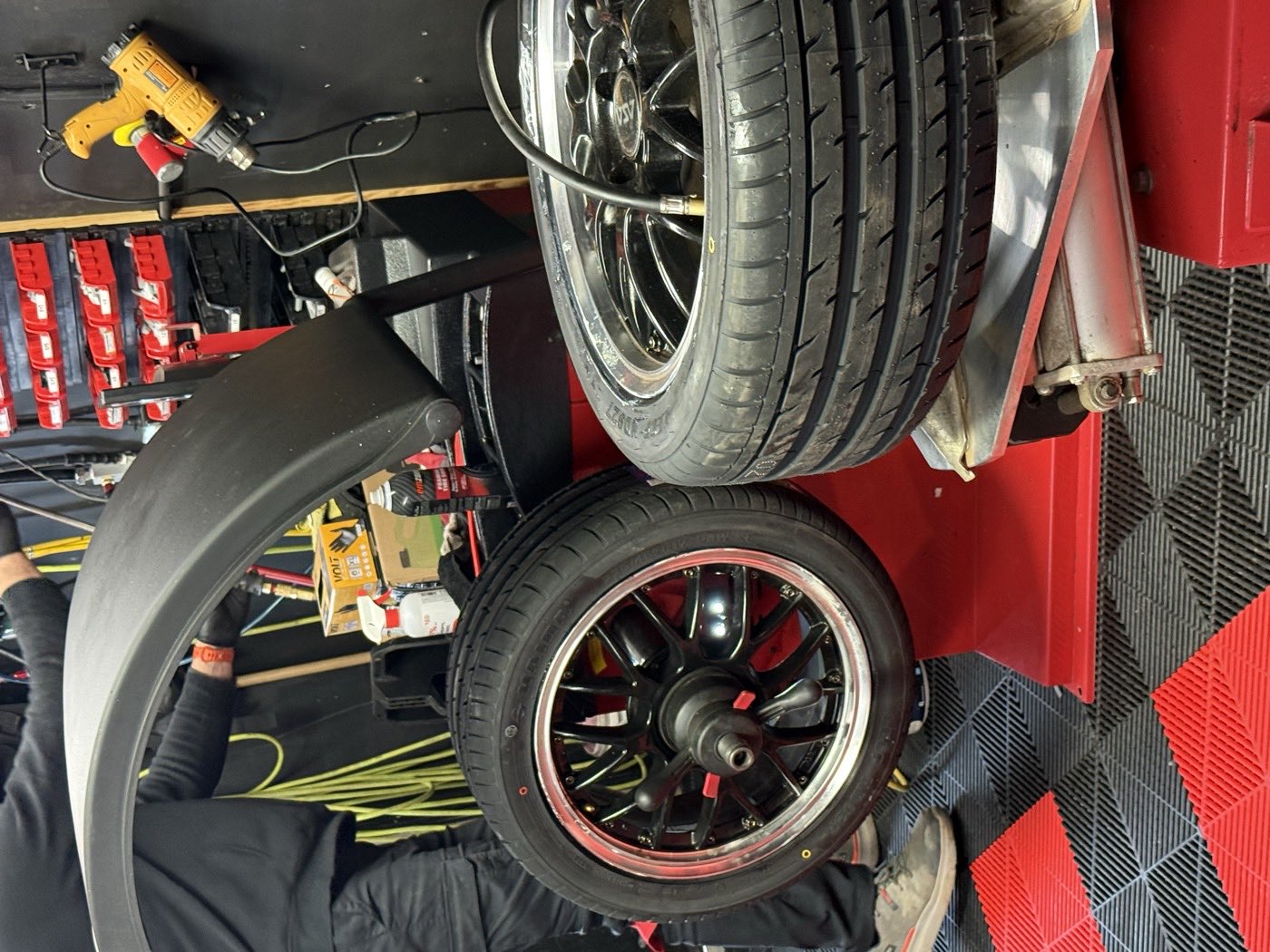
You need four matching winter tires, not two. Fitting winter tires to only one axle leaves one end of the car gripping and the other sliding, which makes the vehicle unpredictable under braking and in corners. Two tires save money today and cost you control on the first icy corner. Installing winter tires on just one axle creates a traction imbalance between the front and rear of your vehicle, which makes handling unpredictable and can cause the car to spin or slide, exactly when you least expect it. Buying two winter tires to save money almost always trades a small saving today for a serious safety risk on the first icy corner.
It is a fair question, because two tires cost less and it feels like "some winter grip is better than none." But winter driving safety is not about how much total grip you have, it is about having the same grip at all four corners. This guide explains why four matching winter tires is the rule, what actually goes wrong with only two, and why even AWD does not change the answer, written for drivers facing a real New Brunswick winter.
Do you need 2 or 4 winter tires?
You need four. A matching set of four is the only setup that grips the same way at every corner, which is what keeps the car predictable when you brake or turn. Two winter tires leave a deliberate mismatch built into the vehicle, and that mismatch stays hidden until the road surface changes.
- Always install 4 matching winter tires. Never 2.
- 2 winter tires create a traction imbalance between the front and rear axle.
- AWD/4WD does not change this: it helps you go, not stop or steer.
- Match all four by brand, model, size, and tread pattern.
- Look for the mountain-snowflake (3PMSF) symbol on a true winter tire.
What actually happens if you only fit two?
One axle grips and the other does not. Two winter tires on the front let the rear swing out in a corner. Two on the rear stop the front from steering where you point it. Either way the car behaves differently at each end, and that is far harder to correct than simply having less grip.
| Setup | What it feels like | The risk |
|---|---|---|
| 4 winter tires (matching) | Consistent, predictable grip; balanced braking and cornering | Lowest: the safe, recommended setup |
| 2 winter tires on front | Good acceleration and steering; rear feels loose | Rear slides out (oversteer) in corners and braking |
| 2 winter tires on rear | Rear planted; front won't turn as expected | Front loses steering grip (understeer); you plow straight |
| Mixed brands/patterns | Seems fine in a straight line | Axles lose grip at different times; unstable |
The pattern is clear: any two-tire setup builds in a mismatch that stays hidden until the road surface changes, which is the worst possible moment to discover it.
If a single tire turns out to be the real problem rather than the whole axle, a repairable puncture is worth ruling out first before buying a new pair.
Why do all four tires have to match?
Because your car's balance depends on all four tires behaving the same way. Different tread patterns, constructions, or sizes grip and let go at different points, so the axles stop working together. Change two tires and you change how the whole vehicle reacts: not just how much grip it has, but where that grip runs out first.
1. Two Tires Create a Traction Imbalance
With winter tires on only one axle, that axle grips while the other slides. Put them on the front and the rear can swing out in a corner (oversteer). Put them on the rear and the front won't steer when you need it (understeer). Both are hard to correct, especially for an average driver reacting in a split second.
Why it matters: A predictable car is a safe car. A vehicle that grips at one end and slides at the other is unpredictable exactly when grip matters most.
2. Braking Distances Get Worse, Not Just Handling
Winter tires shorten stopping distances on snow and ice. With only two, half your braking grip is still coming from hardened all-season or summer rubber. Your stopping distance is limited by the worse pair, and the uneven braking force can pull the car off line.
Why it matters: In winter, the metres it takes to stop are the difference between a near miss and a collision.
3. AWD and 4WD Do Not Solve This
All-wheel drive is great at getting you moving on a slippery hill. It does nothing to help you stop or steer, because braking and cornering grip come entirely from the tires. An AWD SUV on two winter tires (or four worn all-seasons) can accelerate confidently and then fail to stop at the bottom of the hill.
Why it matters: Four winter tires are what actually stop and steer the vehicle. A drivetrain that pulls well on a slippery hill does nothing for you at the bottom of it.
4. Matching Matters as Much as the Number
Four winter tires only work as a set if they match. Same brand, model, size, and tread pattern. Mixing even two different winter tires across the axles reintroduces the imbalance you were trying to avoid.
Why it matters: "Four winter tires" means four *matching* winter tires. A mismatched set is not a safe set.
When Might Someone Consider Only Two? (And Why It Still Isn't Worth It)
Some drivers assume their layout makes two enough. It doesn't. Even on a front-wheel-drive car, two front winter tires leave the rear loose enough to spin under braking. There is no vehicle layout where two is the right setup. If budget is the concern, four value-brand winter tires beat two premium ones.
If you're weighing the cost against safety, see current pricing for a winter tire changeover in Fredericton before deciding to run two instead of four.
How does PitStop & Go handle your winter tires?
We install and store winter tires seven days a week at flat rates. If your winters are already on their own rims, an on-rim swap takes about 10 to 20 minutes. If they need mounting, we mount and balance the full set and check your TPMS sensors so the pressure system keeps working through the cold.
PitStop & Go installs and stores winter tires for Fredericton drivers, seven days a week, at flat rates with no upsells. If your winters are already on their own rims, an on-rim seasonal swap takes about 10–20 minutes. If they need mounting, we will mount and balance a full matching set and check your TPMS sensors so your tire-pressure system works through the cold. We will also help you pick four properly rated winter tires, from premium to trusted value brands, so you get a safe set within your budget.
Whichever setup you land on, the current Fredericton tire change price list covers both the on-rim swap and full mounting.
Key takeaways
- The safe answer is always four matching winter tires, never two.
- Two winter tires create a traction imbalance that causes spinouts or loss of steering.
- AWD/4WD does not change this: tires do the stopping and steering, not the drivetrain.
- All four should match by brand, model, size, and tread pattern, with the mountain-snowflake symbol.
- If money is tight, four value-brand winter tires beat two premium ones every time.
Frequently Asked Questions
Do I need 2 or 4 winter tires?
You need four winter tires, not two. Tire manufacturers and safety organizations agree that a full set of four matching winter tires is the only safe setup. Installing winter tires on just one axle creates a traction imbalance between the front and rear of the vehicle, which makes handling unpredictable and can cause spinouts or a loss of control, especially in corners and when braking on snow or ice.
Is it safe to put winter tires on just the front or just the rear?
No. Two winter tires on the front give you grip to accelerate and steer but leave the rear with less traction, so the back end can slide out in corners. Two on the rear can cause the front to lose steering grip. Either way you create a mismatch that behaves unpredictably when the road surface changes. Always run four matching winter tires.
Do I need 4 winter tires if I have AWD or 4WD?
Yes. All-wheel drive helps you accelerate but does nothing to help you stop or steer on ice. Braking and cornering grip come from the tires, not the drivetrain. AWD and 4WD vehicles still need four matching winter tires for safe stopping and handling in New Brunswick winters.
When should I install winter tires in Fredericton?
Install winter tires once daily highs consistently drop below 7 degrees Celsius, which in Fredericton is usually mid-to-late October. Winter tire rubber stays soft and grippy in the cold, while all-season and summer compounds harden and lose grip below 7 degrees, so it is worth switching before the first snow rather than after.
Do winter tires need to match?
Yes. All four winter tires should be the same brand, model, size, and tread pattern. Mixing different tires by tread pattern, construction, or size makes the vehicle less stable because the axles can lose traction at different times. Matching tires give you consistent, predictable grip on all four wheels.
Are winter tires mandatory in New Brunswick?
Winter tires are not legally mandatory for most drivers in New Brunswick, unlike in Quebec, but they are strongly recommended and many insurers offer a discount for using them. Whether or not they are required, four matching winter tires marked with the mountain-snowflake symbol are the safest choice for a New Brunswick winter.
---
Ready to put on a full set of winter tires? PitStop & Go mounts, balances, swaps, and stores winter tires in Fredericton, seven days a week, at flat rates with no upsells. Book Your Winter Tire Swap.
---
Frequently asked questions
Do I need 2 or 4 winter tires?
You need four winter tires, not two. Tire manufacturers and safety organizations agree that a full set of four matching winter tires is the only safe setup. Installing winter tires on just one axle creates a traction imbalance between the front and rear of the vehicle, which makes handling unpredictable and can cause spinouts or a loss of control, especially in corners and when braking on snow or ice.
Is it safe to put winter tires on just the front or just the rear?
No. Two winter tires on the front give you grip to accelerate and steer but leave the rear with less traction, so the back end can slide out in corners. Two on the rear can cause the front to lose steering grip. Either way you create a mismatch that behaves unpredictably when the road surface changes. Always run four matching winter tires.
Do I need 4 winter tires if I have AWD or 4WD?
Yes. All-wheel drive helps you accelerate but does nothing to help you stop or steer on ice. Braking and cornering grip come from the tires, not the drivetrain. AWD and 4WD vehicles still need four matching winter tires for safe stopping and handling in New Brunswick winters.
When should I install winter tires in Fredericton?
Install winter tires once daily highs consistently drop below 7 degrees Celsius, which in Fredericton is usually mid-to-late October. Winter tire rubber stays soft and grippy in the cold, while all-season and summer compounds harden and lose grip below 7 degrees, so it is worth switching before the first snow rather than after.
Do winter tires need to match?
Yes. All four winter tires should be the same brand, model, size, and tread pattern. Mixing different tires by tread pattern, construction, or size makes the vehicle less stable because the axles can lose traction at different times. Matching tires give you consistent, predictable grip on all four wheels.
Book your visit at PitStop & Go
300 Wilsey Road #1, Fredericton, New Brunswick E3B 5J1 · (506) 248-6006