
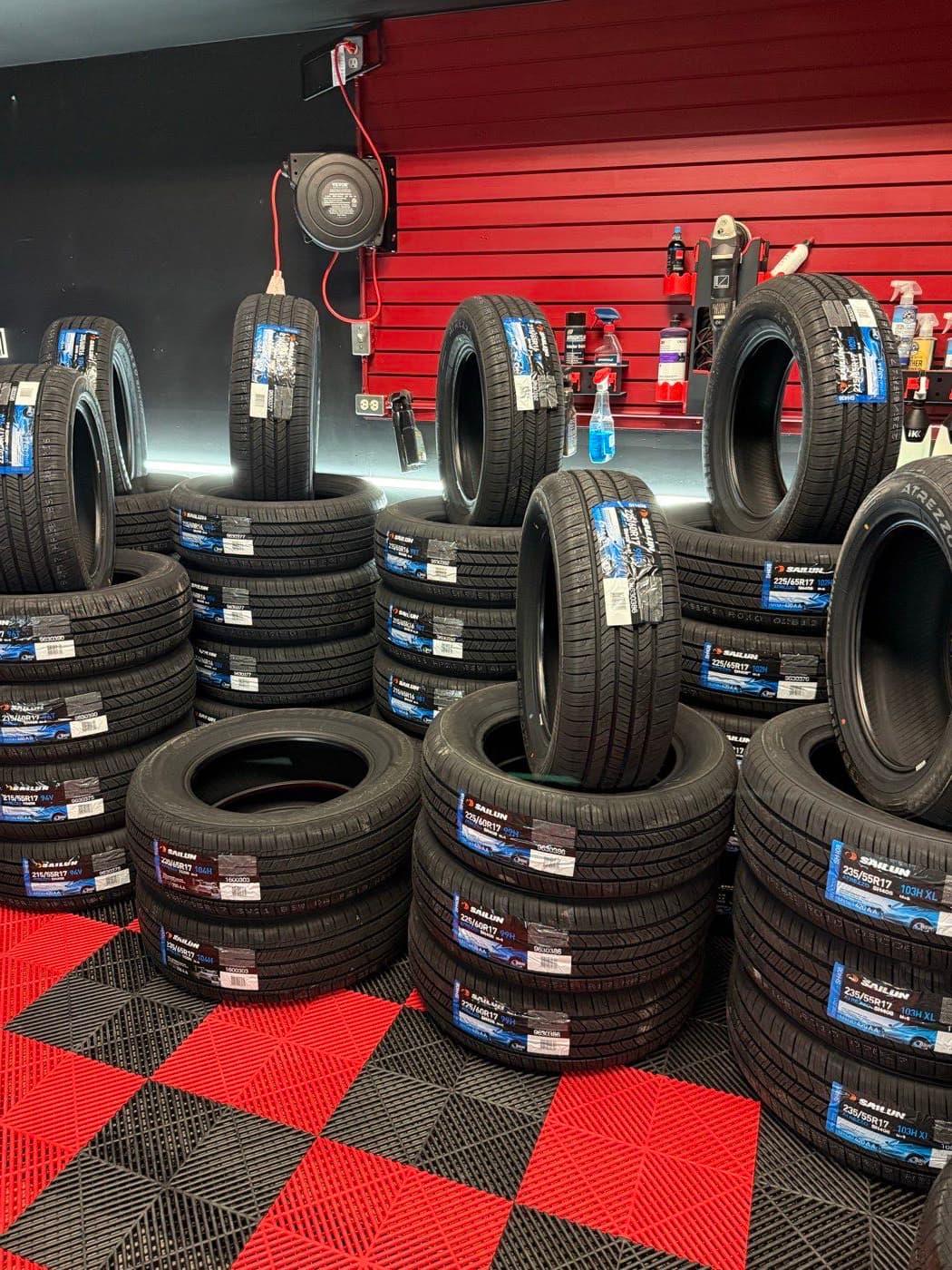
Used tires can be a reasonable short-term buy in the right circumstances, but they carry risks new tires do not: unknown age, hidden internal damage, and uneven wear you cannot always see. Once you account for remaining life and safety, the savings are often smaller than they look.
- Check the DOT date: a 'lightly used' tire can still be dangerously old.
- Inspect for uneven wear, plugs, sidewall cracks, and bulges.
- Used can make sense for a short-term or low-mileage situation.
- For winter safety, the remaining tread on used winters is often too low to bother.
What you cannot see
The biggest risk with used tires is internal damage you cannot inspect from the outside: the aftermath of a previous flat run low, a curb impact, or an improper repair. That damage can let go without warning. With new tires, there is no history to worry about. A tire we've inspected and repaired ourselves carries none of that mystery: see what our tire repair process actually checks.
When used can make sense
A recent, lightly used tire can be reasonable for a short-term need: a beater you will sell soon, a spare, or matching a single damaged tire on an otherwise good set. Just match the size and ideally the model already on the vehicle, and check the date code. If it's specifically a winter set you're weighing, compare fresh winter tire options for Fredericton before settling for used.
Our take
We sell new tires across every price tier, including strong value brands, precisely because a fresh budget tire is usually a better buy than a worn premium one. If the budget is tight, tell us; we will find a new tire that fits the vehicle and the wallet rather than gambling on used. Whatever you choose, Fredericton tire change pricing for a full set is public, new or budget brand alike.
Frequently asked
Are used tires safe?
They can be, if they are recent, have ample even tread, and have no internal damage, but you often cannot verify the history. Hidden damage from a previous flat or impact is the real risk. Inspect carefully, check the DOT date, and when in doubt, do not.
How much tread should a used tire have?
Enough to be worth it. A used tire near the wear limit is a false economy. For winter use especially, you want plenty of tread for snow grip: a used winter with half its life gone will not get you through many seasons.
What should I look for when buying used tires?
The DOT date (age), even tread across the width, no plugs or visible repairs in the wrong places, and no sidewall cracks or bulges. Mismatched brands or sizes across an axle are a red flag. If you cannot inspect the inside, you are buying blind.
Ready to roll out?
Book online in under two minutes, or call the shop and we'll find a slot today.