
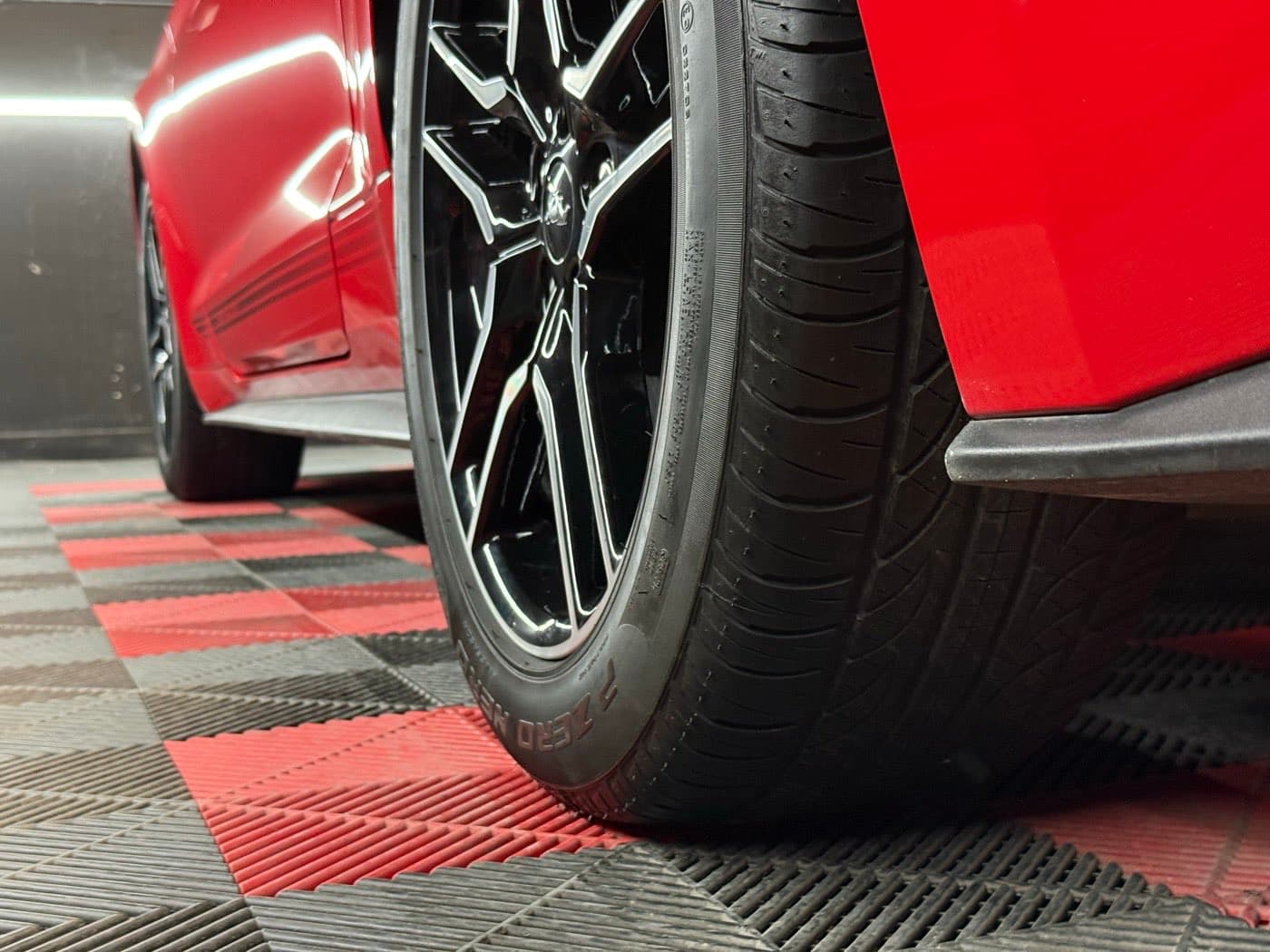
Tires age out two ways: the tread wears down, and the rubber hardens with time. Most last 60,000 to 100,000 km of tread depending on the tire and how you drive, but even with tread left, tires should be replaced by 6 to 10 years old. Here is how to check both.
- Tread: use the toonie test: tread to the bear's paws means lots of life; to the silver edge means shop soon.
- Replace at 2/32 inch of tread; in winter you want more.
- Age out tires at 6 to 10 years even if tread looks fine: check the DOT date.
- Alignment, pressure, and rotation all change how long a set lasts.
Checking tread
In Canada the toonie is the handy gauge. Tread to the bear's paws is healthy; to the lettering is roughly half-worn; to the silver edge means the tire is at or near the legal/safe limit of 2/32 inch. For winter driving you want more than the bare minimum: grip falls off well before the tire is legally bald. Uneven wear from a slow leak is also worth a look: confirm whether it's a repair or a replacement before assuming the whole set is due.
Checking age
Find the DOT code on the sidewall and read the last four digits: week and year of manufacture. Even a tire with good tread should be replaced once it is 6 to 10 years old, because the compound hardens and can crack. This matters most on low-mileage cars and any used tire. If age or wear means the whole set is due, what the fitting costs in Fredericton is public before you book.
Making them last
Keep pressures at the door-jamb spec, rotate every 10,000 to 15,000 km, and have the alignment checked if you notice pulling or uneven wear. In New Brunswick, switching to winters in the cold months also spares your all-seasons or summers from cold-weather wear. Our Fredericton winter tire page has the exact timing if you haven't switched yet.
Frequently asked
How do I check my tread depth with a coin?
Insert a toonie into the tread groove. If the tread reaches the bear's paws, you have plenty of life. If it only reaches the letters, you are about halfway. If it reaches the silver outer ring, the tire is nearly done: plan to replace it.
How high should the tread be up a toonie?
Push the toonie into the groove with the bear facing down. Tread that reaches the bear's paws means plenty of life left. Tread that only reaches the lettering is roughly half-worn. If it barely reaches the silver outer ring you are at or near the 2/32-inch limit and the tire needs replacing, sooner if you are heading into winter, because grip drops off well before a tire is legally bald.
Is the toonie tire check accurate enough?
It is accurate enough to tell you whether to worry, which is what most drivers need. What it will not give you is a number in 32nds. We measure tread with a proper gauge free on every visit, so if the coin test leaves you unsure, drive in and we will tell you exactly where you stand.
Do tires expire even if I barely drive?
Yes. Rubber hardens and cracks with age regardless of mileage. Most manufacturers suggest replacing tires by 6 to 10 years old. Check the four-digit DOT date code on the sidewall, especially important on low-mileage vehicles and used tires.
What makes tires wear out faster?
Under-inflation, poor alignment, skipped rotations, aggressive driving, and heavy loads all accelerate wear. Keeping pressures at spec and rotating every 10,000 to 15,000 km is the cheapest way to make a set go the distance.
Ready to roll out?
Book online in under two minutes, or call the shop and we'll find a slot today.