
Flat Tire: Repair or Replace? How to Tell
Most tread punctures can be safely patched; sidewall damage cannot. The exact rules a tire shop uses to decide between a $45 fix and a replacement.
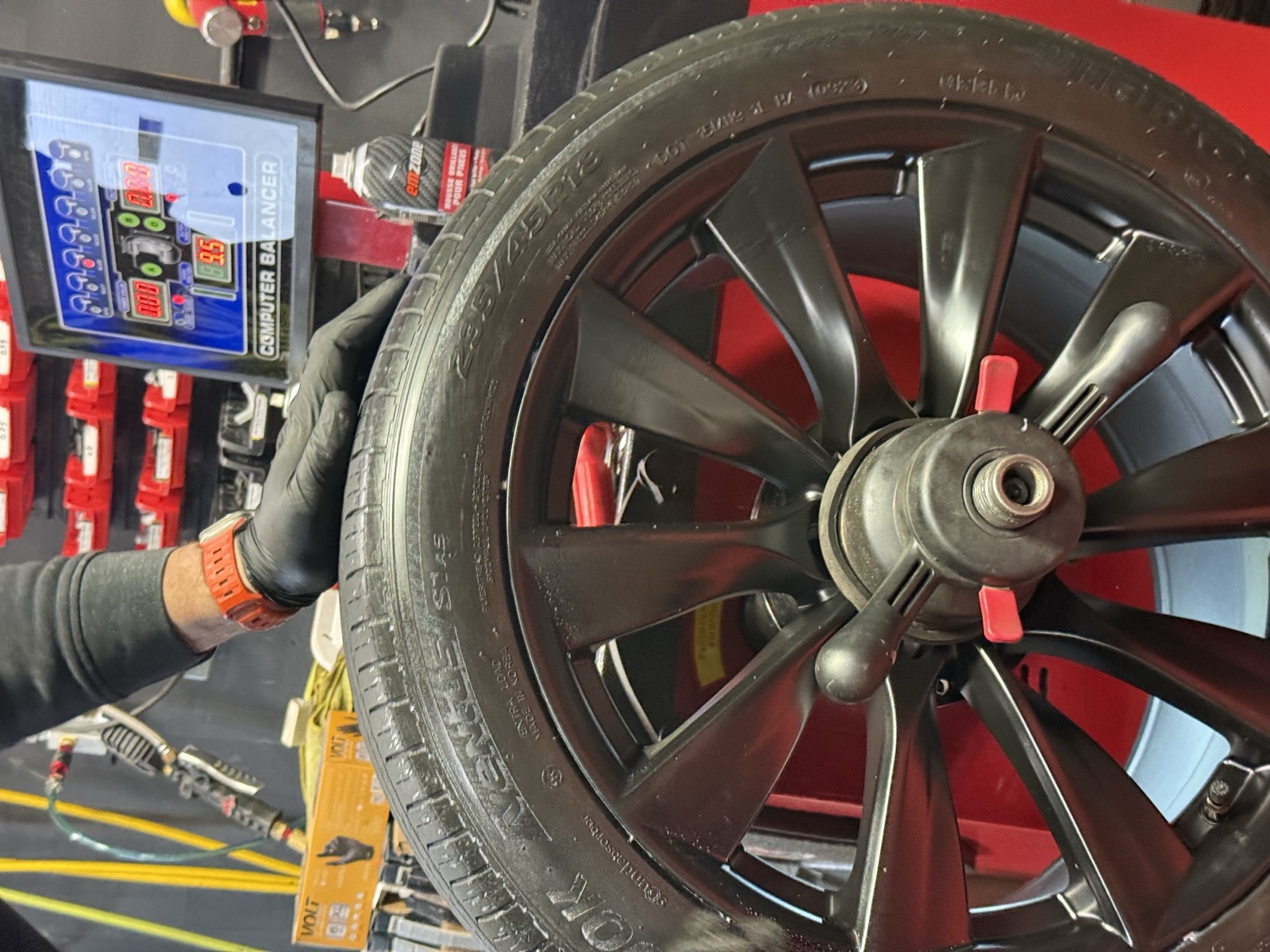
Whether a flat can be repaired comes down to where and how big the damage is. A puncture in the central tread, under 6 mm, with no other damage is almost always a safe, inexpensive patch. Sidewall damage, large holes, and driven-on flats are not repairable — and patching them anyway is dangerous.
Key takeaways
- Patchable: central tread, under 6 mm, no structural damage.
- Not patchable: sidewall or shoulder punctures, large tears, bead damage.
- A tire driven on while fully flat usually cannot be saved.
- We use an internal patch — the only industry-approved repair — with a leak-proof guarantee.
The repairable zone
Picture the tread split into three: a central repairable band and the two shoulders. A puncture in the central band, smaller than 6 mm, with no sidewall involvement and no second nearby puncture, is a textbook repair. Roughly 70% of the flats we see qualify.
When it is a replacement
Sidewall and shoulder punctures, gashes larger than 6 mm, bead damage, and tires that have been driven on while fully flat all mean replacement. So do run-flats that have been run flat. The cost of a tire is never worth a repair that could let go on the highway.
Frequently asked questions
Can a nail in my tire be repaired?
Usually yes, if it is in the central tread, smaller than 6 mm, and the tire has not been driven on flat. We remove the nail, inspect from the inside, and apply an internal patch. Repairs start at $45 and take about 15 to 20 minutes.
Why can't a sidewall puncture be patched?
The sidewall flexes constantly as the tire rolls and carries load. A patch there cannot hold and will fail — potentially at speed. Any puncture in the sidewall or shoulder means the tire must be replaced.
Are plug repairs safe?
An external plug alone is a temporary fix, not a proper repair. The industry-approved method is an internal patch (or a combination patch-plug) installed from inside the dismounted tire, where the technician can inspect for hidden damage. That is what we use.